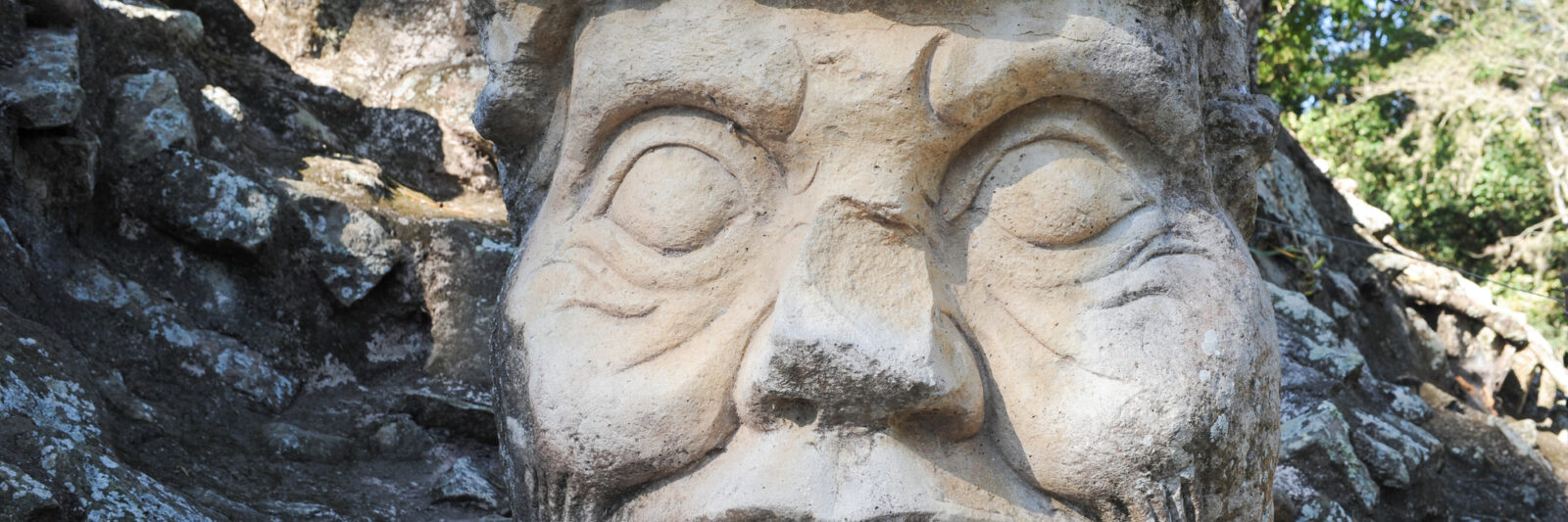
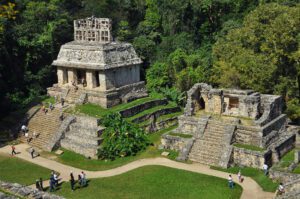
The Yucatan Peninsula is in Mexico, and it hosts some of the best Mayan ruins and archaeological sites that travelers can visit. Travelers can visit temple pyramids, with some being 3,000 years old. Mayan Ruins are a unique attraction in Central America and Mexico, with travelers attracted to the unique architectural designs, and the historical significance it holds.
In some instances, daring travelers can climb up to the top of the temple pyramid.
History of Mayan Civilization
Mayan civilization is considered the most advanced and complex cultures in Central America, before the European explorers arrived.
The culture existed during the 300 to 900 AD. It spread in 40 cities in southern Mexico, Honduras, Belize, and Guatemala. These regions have unique ruins that people visit daily and are considered World Heritage Sites.
The Mayan cities have stone temples and pyramids, referred to as ceremonial centers. The Mayan people lived in rural areas, farming, and prioritizing worship. Worship was a must before planting season, harvest, and during marriage.
The group was considered to be very knowledgeable, especially in arithmetic, and astronomy, which helped in performing their spiritual rituals. The also did human sacrifice to appease and respect their gods.
Why is it Attractive?
1. History
Visiting Mayan ruins is an opportunity to understand the history behind the Mayans. The group is associated with developing a written language and calendar. The Mayans were the first community to plant papaya, rubber and cacao, including the unique architectural designs.
It is amazing that despite the massive inventions, the Mayans fled their cities, leaving them in ruins. Therefore, visiting the location is an opportunity to learn more about this unique group during their early years.
2. Ball Courts
A unique feature in most of the Mayans sites include existence of ball courts. It’s an indication that the tribe played games as a way to honor their gods, known as ‘Hero Twins”.
An amazing observation include the fact that the courts were built at the bottom of the temple, surrounded by a stone ring at the end of the court. This shows the ball courts were for spiritual purposes.
The games were played by players moving the rubber ball inside the stone ring, without using their hands.
3. Location
Most of the Mayan ruins are located in Southern Mexico, and they allow travelers to visit. The majority of the sites are in the Yucatan peninsula, Campeche, Quintana Roo, and Yucatan. The specific locations in Southern Mexico are in Coba, Becan, Altun Ha, Tulum, and Calakmul.
4. Temple Pyramids
The most unique feature about the temple pyramids includes the presence of staircases used by the religious leaders to ascend and perform religious rituals.
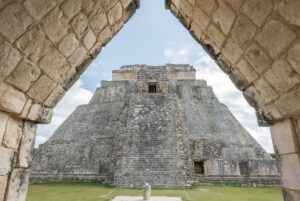
The pyramids were tall, to be used as a god’s symbol, and landmark for the Mayans. An example of the temple pyramid is Pyramid of the Magician found in Uxmal. The pyramid was built by Itzamna, considered the Mayan god of magic.
5. Mayan Art
One unique thing about the Mayans and the ruins they left is their art. The Mayans used artistic expressions based on the location. For example, tourists can see warrior and king carvings in Palenque which is revealed in the existing curving.
In Dzibilchaltun, the Mayans engaged in textile farming and sewing, hence the presence of textiles. The artistic expression by the group is very different from the Europeans as it consists of a unique pattern.
6. Mayan calendar
Mayans are believed to have created a cyclical calendar that has an ending cycle in December. This cycle is relatable to the current calendar, including the hype around the world ending.
It is a 365-day solar calendar, with lined up religious event. The calendar also prioritizes astronomical event that has a 52-year cycle. Without a doubt the Mayan calendar revolutionized the calendar system in the world.
7. Death Rituals
The ruins also reveal tombs, where wealthy Mayans were buried alongside their belongings. The rest of the Mayans were buried in a grave underneath their house. As a tourist you are allowed to visit the tomb location.
8. Worship
Mayans valued worship, and respected their gods, whom they feared for being destructive. They worshipped differently, including molding idols holding ashes of the dead.
During festivities, they brought food to the idols. They also practiced human sacrifice to honor their gods, and it went as far as ripping out a victim’s heart.
9. Mayan Glyphs
Mayans developed their own language, which is present in their cravings on stone, ceramics, temple walls, and wood.
Even scholars have tried interpreting the code, establishing that numbers were written in dots. It was confirmed that 300 glyphs had been used.
10. Sacred Cenote/Well of Sacrifice
The well of Sacrifice is found in Chichen-Itza and had many sacrificial victims whose hearts had been ripped out. Some were thrown alive in wells to sacrifice to the gods. This happened especially during times when the land was experiencing severe droughts.
The Best Mayan Ruins
Copalita Archeological site
This site is unknown to many tourists. It is located on the shores of the Pacific Ocean within Huatulco resort region. The site has pyramid remnants, temples, ball courts, and an archaeological park.
The Park has many stones, an indication of an area where human sacrifices were performed. Copalita archeological site has a pre-Hispanic lighthouse with a lush landscape outside.
Muyil
The ruin is also known as Chunyaxché, and is found in Southern Quintana Roo, next to a lagoon. The ruin is 152 km from Cancun, and 15 km south part of Tulum.
The most unique feature at Muyil includes the Peten architectural style, specifically in the south part of Tikal. It is among the oldest and longest site and hosted the prehispanic trade routes.
The site is easy to access and walk through, with the lagoon adding more rich history to Mayan lessons. It remains the most visible among the 22 pre-Hispanic settlements, in the coastal region. Despite having two archeological sites, only one is accessible to the public. The public site is refered to as Muyil A, while the one not accessible to the public called Muyil B.
This site was peaceful, until recently, when it was upgraded. Now the scenery has ropes, with no climbing signs.
Ek Balam
It is found 174 kilometres west of Cancun, and north of Vallodolid city. Ek Balam has the best cultural accomplishments, and a true representation of Mayan arts.
It has murals decorated in a supposed palace, making it the biggest World Heritage in the Mayan World. When you visit, you have a chance to view beautiful architectonic art that expresses deep culture.
Uxmal Yucatan
The site is located in the Yucatan Mexico and is considered among the best on that side of the peninsula. It has the largest structure, Pyramid of the Magician. The pyramid was the tallest in the area, because the Maya built a new temple on top of an already existing one.
History showed about five constructions having taken place. Uxmal Yucatan is believed to have hosted about 25,000 Maya.
Cobá
This site is located in Quintana Roo, 42Km from Mexico. Most of the buildings in the region are covered in a jungle. Coba is about 80 sq. It has a tallest pyramid known as Nohoch Mul.
The building has 12 stories, with 120 steps to reach the top. When you reach the top, you have a magnificent view of ruins above the jungle canopy.
Archaeologists believe that Coba is probably the biggest Mayan excavation. This is because most of the areas have not been excavated, and travelers are allowed to imagine what is under the ruins and pyramids. You can swim in Coba inside the freshwater cenotes.
Tulum
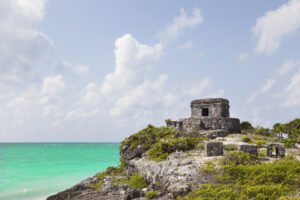
Tulum is located 131 kilometers south of Akumal, and the site faces the sea, offering peace, and nourishment. Tulum is also known as the Walled City, with the Fresco remnants making it one of the most significant cities.
Chichen Itza
This is the most visited ruin on the peninsula, with over eighteen structured rebuilds by the state. The site has the Kukulkan pyramid, which is the tallest and most important.
The best time to visit the site is during the Spring and Fall equinoxes, which occurs during March 21 and September 21 respectively.
This is because of the sun that form steps of the pyramid resembling a snake descending. Chichen Itza is described as a sacred city, because of the pyramid ruins found within the site.
Palenque
The Mayan ruins of Palenque have massive historical significance and has become one of the UNESCO Heritage sites. It has many trees, and wildlife.
One of the Temples in Palenque include Temple of Inscriptions, built by King Pakal’s eldest son, and is believed to be built in 683.
The site also hosts King Pakal’s tomb. The region has high humidity, specifically in the burial chamber where the walls drip water. Tourists are only able to visit here after getting a special authorization.
Calakmul Mayan Ruins
This Mayan ruin hosts two pyramids, considered the largest among the Mayan ruins. In addition, they have reservoirs that provided water to about 50,000 Mayan people.
The Calakmul Mayan Ruin is the farthest at the center of Biosphere Reserve. This is a jungle bordering Guatemala and has wildlife. Monkeys and jaguars have been spotted in the region.
Travelers can climb on top of the structures to view the tropical forests, central plaza and other palaces around.
The site is very expansive, and you can spend a whole day exploring the location, including the many remote locations. Again, the ruin doesn’t receive too many guests.
Monte Alban
It is considered among the initial pre-Colombian cities founded during 500 BC. The occupants engaged in farming to sustain themselves. The site is located in Oaxaca, a city with rich cultures and history.
Monte Alban has become a UNESCO world heritage, because of the rich historical influence. The site receives many visitors, because of the attractive buildings still intact.
Among them include temples, tombs, and astronomical objects. The site has a ball court siting games played by the Mayans to impress their gods.
Teotihuacan
While it is considered to be inhabited by the Aztecs, the initial inhabitants of Teotihuacan remain unknown. The available features show that a number of cultures inhabited the region, based on the design.
The artifacts within the ruins show that it was a home of the Mayan elites, alongside other cultures.
The main attraction includes Pyramid of the Moon that still has many secrets. Archaeologists are revealing secrets still within the site.
For example, animal and human bodies mutilated and underwent excessive brutality. It is believed that the animals and humans were part of the rituals and were sacrifices made to the gods.
When you visit the site, you can access Citadel, a large open plaza surrounded by ancient temples. It also has ‘Avenue of the Dead’, a main road that aligns with the sun once a year. Another feature includes the Pyramids of the Sun and Moon, considered the biggest structures in Mexico.
Edzna
This is called the “House of the Itzas”, many people linking it to the Itza family before they migrated to Chichen Itza. This site remains a mystery making it a great stop or travelers taking a road trip through Yucatan Peninsula.
Edzna was among the first cities to be abandoned by the Mayans, but no reasons have ever been known for the abandonment. It was rediscovered in 1907, and currently hosts the ‘Evening Light Show” that aims at lighting all the cities in ruins.
Nearby, you can visit Gran Acropolis, and Temple of the Masks. The masks show two masks, with one honoring the Sunrise God, and another the Sunset God.
There is also a Palace facing the Gran Acropolis, a residential building running from the North to the South.
El Rey
El Rey is one of the small communities that the Mayans frequented, located in the middle of Cancun. The ruins are small, and a traveler can take less than an hour to visit every place. It has many temples, but the majority of persons visiting rank it as unspectacular. It does not host any of the tall buildings and the architecture is very low key. Not especially recommended.
Next: What you Must Know About the ADO Buses in Mexico
Hi I’m Shannon!

Hi, I’m Shannon and I’m a Canadian who fell in love with Mexico on my first trip to Puerto Vallarta when I was a young adult.
That started a 30 year love affair with this country which led to marrying my Mexican husband and building a home in Mexico. And now I have even a stronger connection to this gorgeous and complex country.
