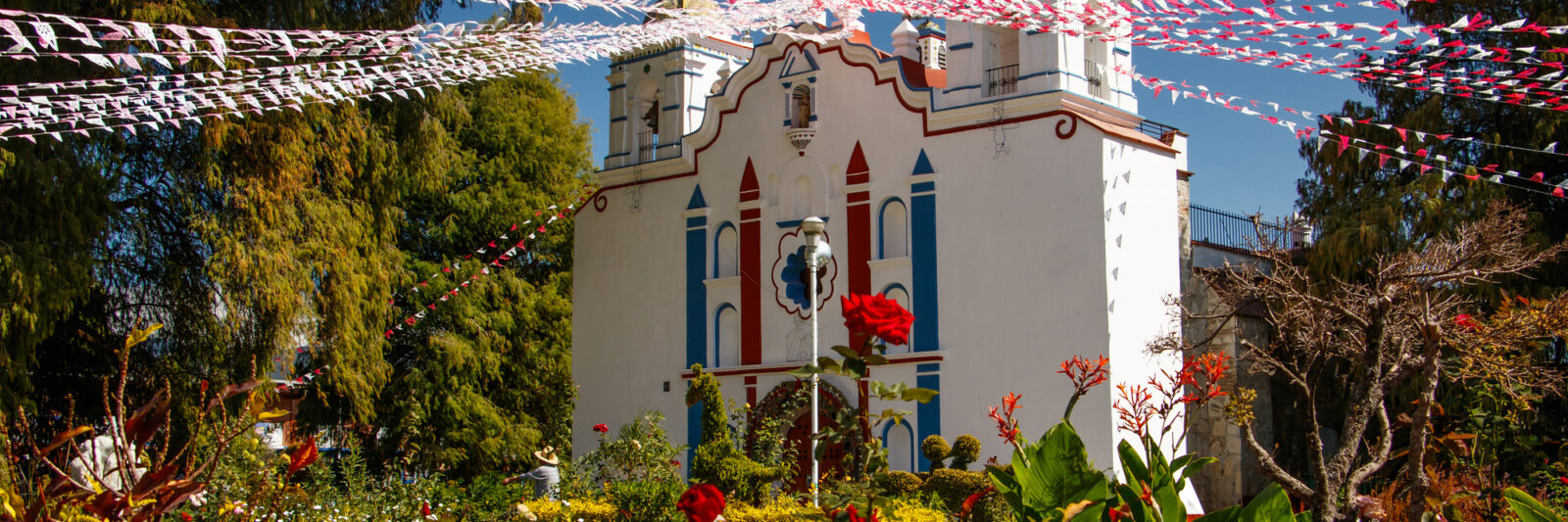

Arbol del Tule (El tule Oaxaca) is the most famous Mexican tree in a gated churchyard, seven miles from Oaxaca city, in the picturesque town of Santa Maria. Locals refer to it as a ‘tree of life’.
This Mexican tree is ranked as the widest tree globally. The tree has a tremendous cultural significance among Mexicans, who celebrate it every second Monday of October.
General Facts about the Tree of Life
- Tree Name: El Árbol del Tule
- Species: Montezuma bald Cypress
- Nickname: Tree of Life
- Address: 2 de Abril, 8va Etapa IVO Fracc el Retiro, 68297 Santa María del Tule, Oaxaca, Mexico
- Visiting Hours: 8 am- 8 pm
- Height: 116 ft (35.4m)
- Weight: 636,107 tons
- Diameter: 46 ft (14m)
- Circumference: 190 ft (58m)
- Stoutest tree trunk in the world
Zapotec locals hold big party celebrations for the Tule tree, as they believe it shares similar attributes with themselves.
The tree’s wideness led many to think it had merged from multiple trees. However, performed DNA analysis showed that this miraculous force of nature is a single tree.
El Arbol del Tule en Oaxaca has inspired imaginations with the beautiful knots and crooks. Those touring the tree confirm seeing human faces and other animal creatures such as Lions, jaguars, and elephants on the tree. Amazingly enough, the tree is still growing.
History of El Arbol del Tule en Oaxaca
Humans planted this massive tree during the epoch. The locals spoke Nahuatl dialect before being colonized by Spaniards and referred to the tree as ahuehuete, which means “old man of the water,” in their dialect.
Even during the pre-Hispanic period, the tree’s name reflected its age. This shows why it’s among the oldest trees in the world.
El Tule’s age is estimated at between 600-1500 years old. But most scientists indicate that the tree is about 2,000 years old.
A local Zapotec legend believes that El Tule was planted by an Aztec priest, pechocha, 2000 years ago. Pechocha lived with a wind god called Ehacatl. The legend’s estimation is similar to the scientific analysis.
The Zapotecs coined El Tule’s name from their Nahuatl local language, meaning bulrush plant. The plant is a reed growing in marshes and swampy areas.

Why is Location of the Tree Important?
The location of this special tree explains the age and purpose of the spiritual tree. The location reflects an ancient sacred worship ground of the Aztec gods. A pre-history many guests would love to know.
Spanish colonization led to establishment of a Roman Catholic church on the grounds. The tree was over 1,000 years before the church was built, though. And this rich culture and integration into Roman leadership is worth knowing.
El Tule’s history is little known and remains a mystery to many. You will not find information about its origin and symbolic significance, and visiting it physically is an amazing opportunity.
Many believe the valuable information was passed down to a lineage through oral transmission. This was disrupted during the many years of war between the natives in Mexico and foreign conquerors. Hence, there is little information about the origin of el Tule.
The Tree of Life
Locals consider El Tule a tree of life representing Mexicans’ timeless and universal sacred traditions. El Arbol del Tule has been revered across many cultures and religions in Mexico for thousands of years.
You can join the pilgrims visiting El Tule and witness the oldest and stout tree that baffles even scientists. You have a chance to see a human’s eternal affinity.
It is not an exaggeration to say that El Arbol del Tule is the world’s last living link to ancient times.
The roots and trunk of El Tule remain complex. The process is explained through a children’s traditional event. The kids engage in an activity to find animal visages inside the wooden convolutions. Hence the name “Tree of life.”
Beliefs around El Tule are universal across many cultures, and the tree continues to represent the pre-Hispanic history populating Oaxaca.
There are fears that El Arbol del Tule is dying. However, nobody has come out clearly to reveal the unmistakable signs of the dying process.
However, there is an assertion that industrialization is the leading cause. But local leaders dispute the idea as they believe it’s a common belief that has been going on for years. But the tree has continued to survive and will likely be standing when many of us will all be gone.
Features of El tule Oaxaca
- El Tule tree has a 54 meters circumference (164 ft)
- It is stout at 11.62 metres in diameter
- The tree is over 2,000 years old
- It is a representation of Zapotec civilization
- Widest and natural wonder of the world
- El Tule is a sacred tree
Planeta.com describes the tree as a natural wonder viewed as a perfect natural monument, especially for the Zapotecs. Santa Maria del Tule has many ancient and iconic trees. The majority are from the species of the Montezuma Cypress trees, which el Tule is from.

Why is El Tule Oaxaca a God’s Walking Stick?
El Tule tree has unique features. The most unusual include pocket mirrors on the tree that reflects the sun. While touring the tree, you will likely see squirrel tail figures and Carlos Salina ears.
The Ayook (Mixe) believe El Tule is a walking stick used by one of their gods. It later developed roots and has grown to become a famous tree.
How to Access the Municipality of Santa María del Tule
To visit El Tule Oaxaca, you must access Santa María del Tule town. You can access the city using public transport, a taxi, a car, or even walking. Walking is good for you, especially when faced with the handful of road blockades experienced in Oaxaca city.
To have an excellent local experience, you should consider boarding the purple bus. The Purple bus is found at the VW dealership or Parque del Amor bus stop.
If you are a sports lover, renting a mountain bike is a better option. Get one at Oaxaca Centro and ride to El Tule.
El Tule is close to Oaxaca, making it a perfect destination for a handful of those touring Oaxaca. You’ll enjoy several patron saint festivals alongside the main festival for El Tule. The event happens every second Monday of October.
And if you’re looking for accommodation in Oaxaca or the surrounding area, make sure to use the reputable Booking.com. Just enter your destination below along with dates and choose your hotel!
For anyone traveling to Oaxaca, make El Tule your first destination before you proceed further east to other towns such as Mitla and Tlacolula.
How to Visit El Tule
El Arbol is within Church grounds in the town square. It is at the center of Santa Maria del Tule town, about seven miles from Oaxaca.
You can use the Mitla road, an important archeological site in Oaxaca. You pay a small fee of less than $1 to access El Tule. After receiving the entrance ticket, you will be given a leaflet expanding on some information about the tree.
When you visit El Arbol del Tule, be ready for overwhelming sensations. It is a unique life experience of joy and serenity. It offers the visitors a chance to attune to the ancient pre-historic feeling of pain and serenity.
Nearby Places to Visit around El Tule
The mitla archaeological ruins are as old as El Tule. As a traveler, you can pose for photos when you make stops at Mitla and Hierve el Agua. You can make additional excursion visits to Teotitlan del Valle or the mezcal factories around. Whether visiting alone or in a group, these are the few things you could do.
Search for tours that provide a fantastic experience of the local’s culture and traditions. You can enjoy a private sightseeing tour of Oaxaca. Viator is a reputable company that provides many different tours and I would highly recommend them.
Visit the archeological locations, artisan workshops, traditional markets in Oaxaca, mezcal distillery, and the ancient Hierve el agua.
Make the most of your visit by having a fully-packed itinerary without having to pause. A private tour will offer you a personalized experience within Oaxaca.
The nearby locations include Mitla, Tule, Teotilan, and Tlacolula, which provide Oaxaca’s rich cultural and ancient history.
Visit the Mitla archaeological site at Mitla, and learn about the ancient Zapotec’ history, who are the custodians of the El Tule tree at Tlacolula town.
You could visit the artisan village at Teotilan del Valle, proceed to the mezcal distillery, and sample the drinks while learning about the manufacturing process.
You only need an air-conditioned vehicle, a professional driver, and enough food and drinks.
Other areas you could visit include Palacio Municipal De Santa Maria Del Tule, Santa Maria de la Asuncion, Mezcales con Alma de Oaxaca, and Mezcaleria el Sabor de Oaxaca.
Book your tours on Viator below:
The Last Word on the Tree of Life
Wow! Words cannot explain this excellent gift of nature. The 2000+-year-old tree links the ancient with the Roman empire, expressing a vital cultural significance of the Oaxaca people.
El Tule is a living witness of the grand and majestic culture with sacred significance. Therefore, let this be part of your plan when listing the “must-see” natural things in Mexico. Visit the tree and have a unique spiritual experience.
And don’t forget to tour the lovely “Puebla Magico” town of Santa Maria del Tule.
This tree has the title of being the widest in the world, making it an impressive specimen. You can view it from the closer municipal esplanade or the nearest street. You can witness the wideness of the tree from a distance. It is as tall as the church within the compound, in addition to dwarfing the neighboring city hall.
However you view it, “God’s walking stick” is definitely a marvel of nature.
Hi I’m Shannon!

Hi, I’m Shannon and I’m a Canadian who fell in love with Mexico on my first trip to Puerto Vallarta when I was a young adult.
That started a 30 year love affair with this country which led to marrying my Mexican husband and building a home in Mexico. And now I have even a stronger connection to this gorgeous and complex country.
