

Mexico is diverse, with exotic wildlife supported by tropical weather, a mixed rainy and dry season, and limited temperature fluctuations. Mexico’s ecosystem is a blend of deserts, grasslands, tropical and temperate forests, wetlands, and mountains.
The weather makes it attractive for ancient wildlife, birds, and insects, most migrating from the North.
What is the National Animal of Mexico?
While Mexico has many National Animals, the Golden Eagle (Aquila chrysaetos) is the Mexico national animal officially.
Mexico considers the Golden Eagle as a great symbol of strength and the country’s pride. The Golden Eagle is 8 feet with a powerful beak that devours prey at speeds of over 150 miles/hour.
The national bird of Mexico has been a symbol of Mexican culture since the Pre-Columbian period. The image of the golden eagle devouring a rattlesnake has been adorning Mexico’s flag.
Why is the Golden Eagle the national animal of Mexico?
The Golden Eagle is associated with the Aztec culture. According to a-z-animals.com, Aztec gods directed the Tenochtitlan people to develop their city upon seeing a sign from an eagle and a serpent. It is believed that the two animals were found in a lake in Mexico, with the eagle connecting to the ancient civilizations.
Does the Mexican Flag feature the Golden Eagle?
Yes. The Mexican flag has an image of a golden eagle devouring a snake perched on a pear cactus. It is a representation of Aztec people directed by the god Huitzilopochtli to identify a sign where to develop their capital.
So, when the Aztecs found an eagle eating a cactus, they developed their capital at Tenochtitlan. Currently, Mexico City is at the same site as the Tenochtitlan ruins in the middle of the city.
Is the Golden Eagle on the Mexican Currency?
Yes. The coat of arms has a golden eagle eating a snake. It is on the Mexican peso.
Other National Animals of Mexico
- Jaguar
The jaguar, scientifically known as Panthera onca, is a large and powerful feline native to the Americas. It is the only big cat found in the Americas and is considered the national mammal of Mexico.
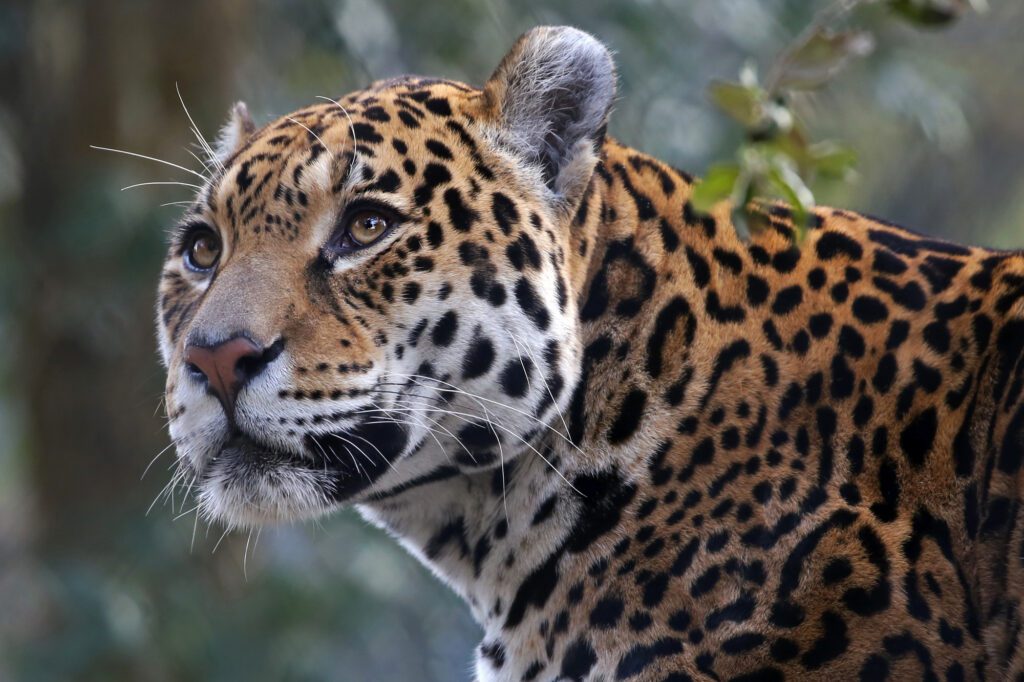
Physical Characteristics: The jaguar is known for its distinctive coat, typically a golden-yellow color with black spots arranged in a circular pattern. The spots are called “rosettes” and are used as camouflage in the jaguar’s natural environment.
The jaguar has a stocky body, powerful legs, and a large head with strong jaws. It can weigh up to 150 kilograms and measure up to 2 meters in length.
Habitat: The jaguar is found in many habitats, including rainforests, deciduous forests, and savannas. They are also found in wetlands and near rivers and lakes. In Mexico, the jaguar is mainly found in the tropical forests of the Yucatan Peninsula, the Central American rainforests, and the Sierra Madre Occidental mountain range.
Significance of the jaguar as the national mammal: The jaguar symbolizes grace, power, and beauty in Mexico. It has been revered by many ancient cultures in the region, including the Maya and the Aztecs, and has been depicted in many of their art and artifacts. The jaguar also symbolizes Mexico’s wild and untamed nature, representing the country’s vast and diverse ecosystems.
- The Xoloitzcuintli
The Xoloitzcuintli, also known as the Mexican Hairless Dog or simply Xolo, is a unique and ancient breed considered Mexico’s national dog.
Physical Characteristics: The Xoloitzcuintli is a small to medium-sized dog that comes in two varieties: hairless and coated. The hairless variety has smooth, fine skin, typically black, gray, or copper. The coated variety has short, smooth hair and is the same color as the hairless variety.
Both varieties have a muscular and athletic build and have a distinctively long, pointed snout. They typically weigh between 7-18 kg and stand around 30-60 cm tall.

Significance of the Xoloitzcuintli as the national dog: The Xoloitzcuintli symbolizes loyalty, companionship, and cultural heritage in Mexico. It deeply connects to the country’s history and culture as an ancient breed. Its role in ancient Mesoamerican cultures has made it an important symbol of spiritual and cultural significance for many Mexican people.
- The Green Turtle
The green turtle, scientifically known as Chelonia mydas, is a sea turtle considered the national reptile of Mexico and one of the national animals of Mexico.
Physical Characteristics: The green turtle is named for the greenish color of its fat, which is visible through its skin. Adult green turtles have a smooth, olive-brown carapace (upper shell) and a pale yellow plastron (lower shell). They can grow up to 4 feet in length and weigh up to 440 pounds. They have large flippers and small heads proportionate to their body size.
Habitat: Green turtles are found in warm waters worldwide, including the Gulf of Mexico, the Caribbean Sea, and the Pacific Ocean. They spend most of their time in the water but come ashore to lay eggs on sandy beaches.
In Mexico, the green turtle is commonly found in the Gulf of Mexico, the Caribbean Sea, and the Pacific Ocean.
Significance of the green turtle as one of the national animals of Mexico: The green turtle is a symbol of the ocean, sustainability, and conservation in Mexico. As a marine species, it represents the country’s rich coastal ecosystems and the importance of preserving these habitats.
The green turtle is also an important cultural symbol for many Mexican communities. Many Mexican people depend on the sea for their livelihood, and the green turtle has long been a symbol of the ocean’s bounty and the importance of preserving it.
The green turtle is also a symbol of the cycle of life, as it is a species that has been around for millions of years and continues to survive despite the challenges it faces.
- The Chapulin
The Chapulin, also known as the Mexican Grasshopper, is an arthropod species considered one of the national animals of Mexico.
Description of the Chapulin: The Chapulin is a small, brightly colored grasshopper typically around 2-3 centimeters in length. It has a cylindrical body, long antennae, and powerful hind legs.
They are known for their bright colors, ranging from green to red to orange, and for the black and white striped pattern on their hind legs. They are found throughout Mexico in various habitats, including grasslands, forests, and deserts.
Significance of the Chapulin as the national arthropod of Mexico: The Chapulin is a symbol of Mexico’s biodiversity and the important role insects play in the country’s ecosystems. It is also a symbol of Mexico’s cultural heritage, as it has been used in traditional Mexican medicine for centuries and is considered a delicacy by some Mexican people.
The Chapulin symbolizes resilience and adaptability, as it can survive in various habitats and climates. It’s a hardy species that can withstand extreme temperatures and dry conditions, symbolizing the Mexican people’s ability to adapt and thrive in difficult situations.
The Chapulin is a symbol of Mexican folklore, as it is often featured in traditional Mexican stories and art. It is also featured in Mexican cuisine, often used as a seasoning in traditional dishes, making it a symbol of Mexico’s rich culinary heritage.
The Mexico National Animal
Mexico is home to diverse national animals that reflect the country’s rich culture and heritage. Each national animal holds a unique significance, from the golden eagle, symbolizing strength and pride, to the jaguar, embodying grace and power.
The Xoloitzcuintli, the national dog, represents the deep bond between Mexicans and their pets, while the green turtle symbolizes the importance of preserving the ocean’s bounty.
The Chapulin, the national arthropod, represents the country’s biodiversity and adaptability. These national animals are symbols of Mexico’s past and present and a reminder of the importance of conservation and preservation for future generations.
Next: Poisonous Snakes in Mexico: The Bad, Beautiful, and the Deadly
Hi I’m Shannon!

Hi, I’m Shannon and I’m a Canadian who fell in love with Mexico on my first trip to Puerto Vallarta when I was a young adult.
That started a 30 year love affair with this country which led to marrying my Mexican husband and building a home in Mexico. And now I have even a stronger connection to this gorgeous and complex country.
